For many upcoming artists, the pressure to drop music fast is real.
You find a hard beat on YouTube, record your vocals, mix it, upload it to streaming platforms, and start promoting. Everything feels exciting—until one day your song gets taken down, claimed, demonetized, or worse, you receive a legal notice.
This is one of the biggest mistakes rising artists make: using beats without proper licensing.
It may seem harmless in the beginning, especially when you’re still growing, but using unlicensed beats can seriously damage your career before it even starts.
What Is an Unlicensed Beat?
An unlicensed beat is any instrumental you use without permission from the producer or rightful owner.
This usually happens when artists:
• Download beats from YouTube without buying the lease
• Rip instrumentals from another song
• Use “free beats” without reading the license terms
• Buy a beat but ignore the usage limits
• Use beats from producers who never cleared their own samples
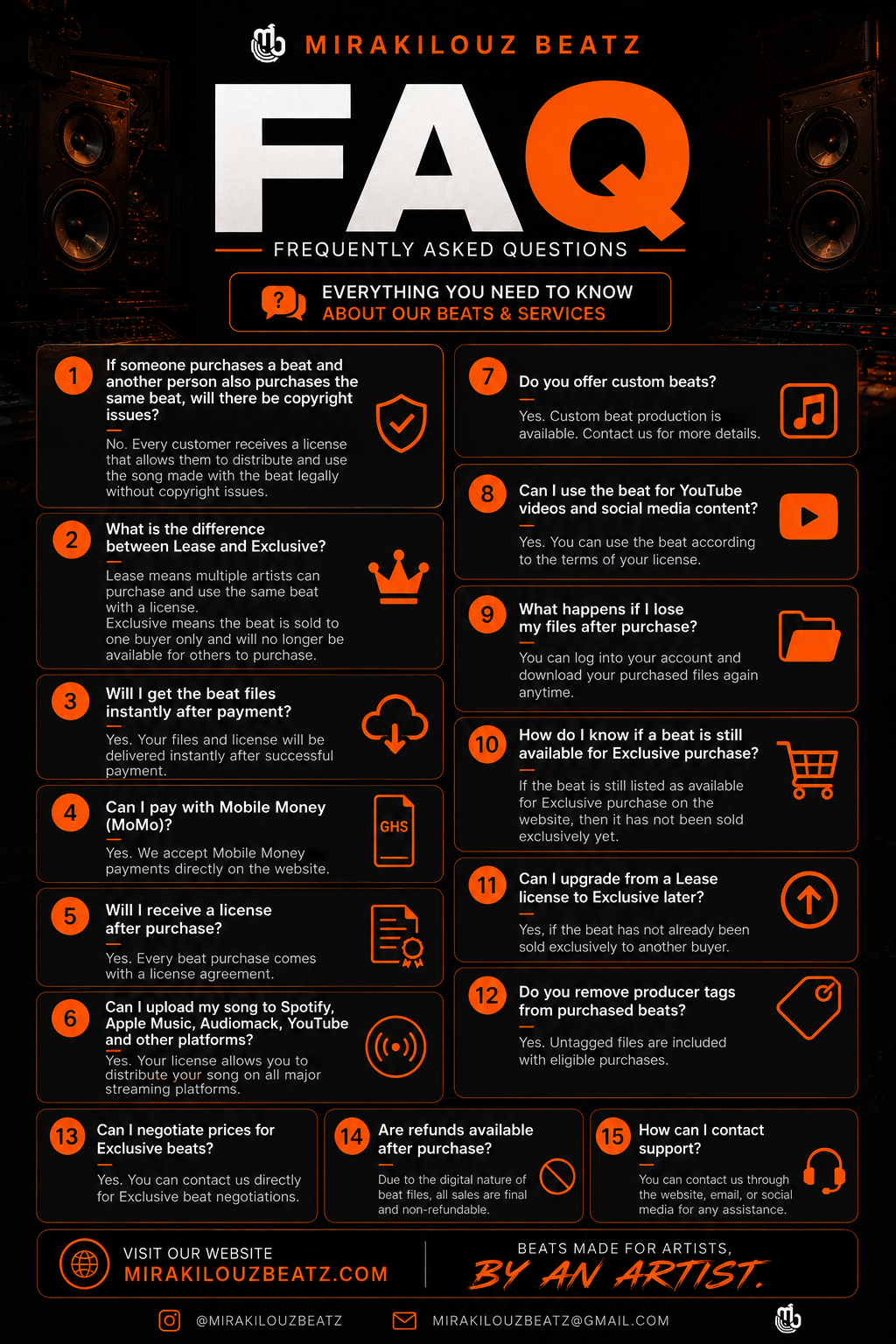
Even if a beat is easy to download online, that does not mean it is free for commercial use. Copyright protection applies automatically when the beat is created.
The Biggest Dangers of Using Unlicensed Beats
1) Your Song Can Be Removed From Platforms
Spotify, Apple Music, YouTube, TikTok, and SoundCloud all take copyright seriously.
If the producer files a complaint or Content ID detects the beat, your song can be:
• Removed instantly
• Muted
• Blocked in certain countries
• Hit with copyright strikes
• Prevented from monetizing
This means all your promo effort, streams, and momentum can disappear overnight.
2) You Can Lose All Revenue
Imagine your song starts blowing up.
Now the producer realizes you never bought the license.
They can legally claim:
• Streaming royalties
• YouTube earnings
• Performance revenue
• Publishing splits
• Any money made from the song
In some cases, they may even claim 100% ownership of the master’s earnings until the issue is settled.
3) Legal Trouble and Expensive Damages
This is where it gets dangerous.
Using a beat without permission is copyright infringement, and the owner can sue for damages.
Depending on the country and seriousness, this could include:
• Cease-and-desist letters
• Settlement demands
• Legal fees
• Court orders
• Statutory damages
In the U.S., statutory damages can range from $750 to $30,000 per work, and up to $150,000 for willful infringement.
That’s far more expensive than simply buying a beat lease.
4) It Damages Your Reputation
Music is also business.
Promoters, blogs, labels, playlist curators, and collaborators may stop taking you seriously if they find out your records are built on stolen or unlicensed beats.
A strong brand is built on professionalism, and licensing is part of that professionalism.
5) Your “Hit Song” Might Never Be Cleared
This is the most painful one.
A lot of artists wait until a song blows up before trying to clear the beat.
By then, the producer can:
• Increase the price
• Demand higher royalty splits
• Refuse clearance entirely
• Sell the exclusive rights to another artist
That viral song you worked so hard on could become unusable.
How Upcoming Artists Can Protect Themselves
The smart move is simple:
Always get the proper beat license
Before releasing any song, make sure you have:
• The PDF lease/license agreement
• Rights for streaming and monetization
• Distribution limits
• Commercial rights
• Clear sample information
• Exclusive terms if needed
Always keep the license document safe in your email, cloud storage, and local drive.
Final Thoughts
As an upcoming artist, your focus should be on building a career the right way, not cutting corners that can destroy your progress.
A beat lease may feel like an extra cost today, but it protects your song, your money, your reputation, and your future.
Never let a preventable licensing issue kill your breakout moment.
If you believe in your music, protect it properly.
Contents
Written by Armah Best
Published April 14, 2026
Updated April 14, 2026